How to Host Afternoon Tea at Home
The menu, the timing, and the four pieces of equipment that actually matter. No brand names, no shopping list — just the method.
Tea Rooms.org Editors · September 1, 2026
Afternoon tea at home is a light meal for four to eight people served between roughly 2 and 5 PM, built around a pot of properly brewed tea and three courses of small food. It is not difficult. Most of the work is done the morning of, and nothing requires a professional kitchen. What it does require is a plan, because the food is served all at once and the tea has to arrive hot.
The Menu, In Three Tiers
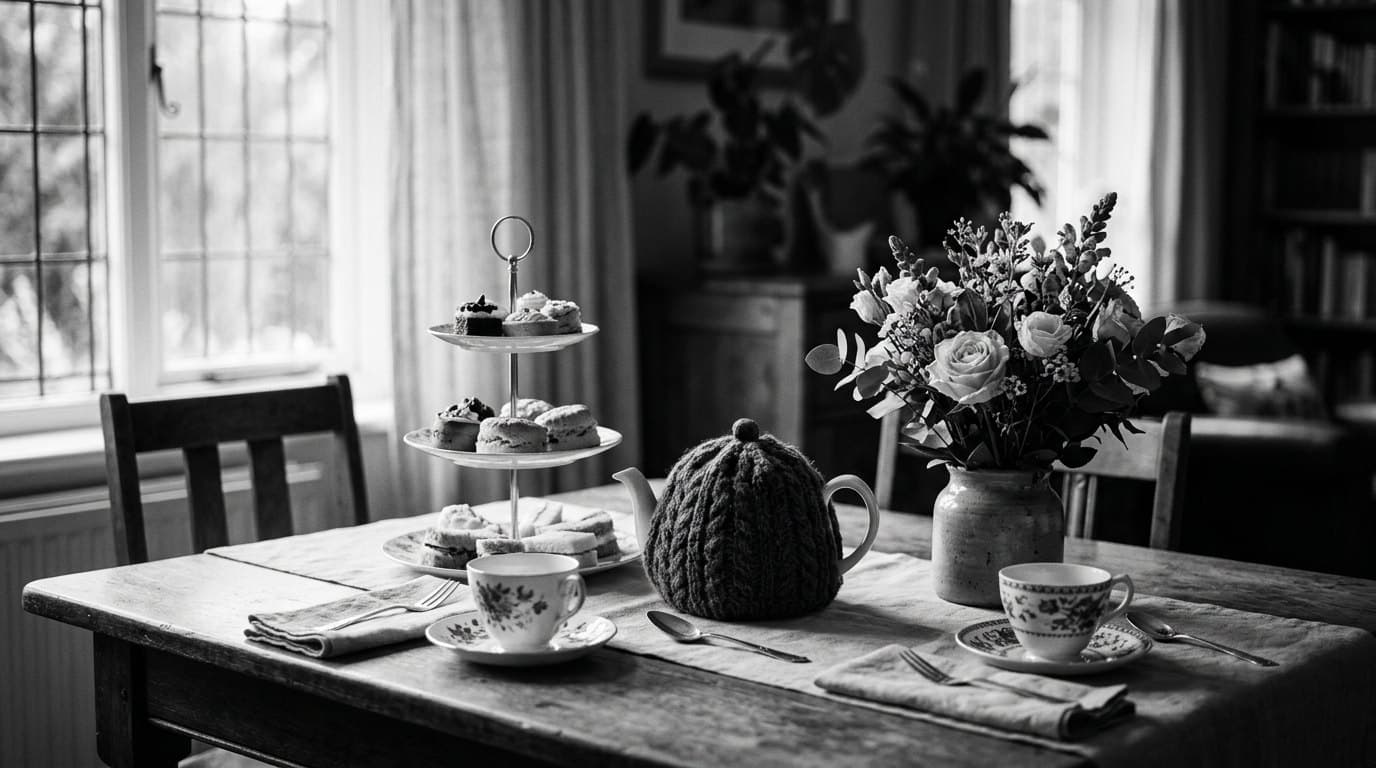
Follow the classic stand: savories on the bottom, scones in the middle, sweets on top. Plan on two or three finger sandwiches, one or two scones, and two or three small sweets per guest.
Sandwiches: cucumber with butter on white bread; egg salad with cress or chives; smoked salmon with cream cheese on brown bread; a chicken or ham option for the substantial eaters. Cut the crusts, then cut into fingers or triangles no more than two bites wide.
Scones: a plain scone recipe with a fruit variation (currant or raisin) is enough. Serve with clotted cream or a thick whipped cream, and a strawberry or raspberry jam. Lemon curd is a welcome third.
Sweets: choose things that hold at room temperature — shortbread, a lemon drizzle or Victoria sponge cut small, a fruit tart, macarons or a chocolate square. Two of these, made well, beat five made in a hurry.
The Tea
Offer two teas: one black (an English Breakfast-style blend or Earl Grey) and one caffeine-free herbal (chamomile or peppermint). Brew loose leaf if you can, one teaspoon per cup plus one for the pot, with water just off the boil for black tea. Steep three to five minutes, then strain into a second warmed pot so the leaves stop steeping. A pitcher of milk, a bowl of sugar cubes, and lemon slices cover every preference.
The Gear
Four things matter. A tiered stand — three plates on a central rod — lets you serve everything in the footprint of one plate; a large platter works if you do not have one. A teapot that holds at least four cups, ideally two pots so one can brew while the other pours. A fine-mesh strainer that sits over the cup, or a pot with a built-in infuser. And cups with saucers — mismatched vintage cups are entirely in the spirit of the thing. Beyond that: small plates, tea spoons, cloth napkins, a milk jug, a sugar bowl, and a jam spoon. Nothing needs to match.
The Timeline
The day before: make jam or curd if you are making it, bake shortbread or any sweet that keeps, and iron the tablecloth.
Morning of: bake the scones (they are best within six hours), make sandwich fillings, and prepare the tea tray with cups, spoons, milk, and sugar.
One hour before: assemble sandwiches and cover with a damp towel so the bread stays soft. Plate the sweets. Fill the kettle.
Fifteen minutes before: warm the pots with hot water, then empty them. Load the stand — sandwiches, scones, sweets — and bring it to the table with the guests.
As guests sit: pour the water, steep, and serve. Refill the pot once or twice through the afternoon; a second round of fresh tea about forty minutes in is the mark of a good host.
Small Rules That Make It Work
Keep the room warm enough that nobody keeps a coat on. Seat guests at a table, not on a sofa with a plate on their knees. Start the meal by pouring tea, and let the food follow. Tell people to eat from the bottom tier up, and do not rush the sweets. Ninety minutes is a natural length; two hours is generous. When the pot goes cold and the conversation has not, you have done it right.
Explore the full directory
Verified hours, pricing, and booking for every tea room in Texas.
Browse Texas Tea Rooms