Afternoon Tea vs. High Tea vs. Cream Tea: What Each One Means
Three names, three different meals — and an American habit of using the wrong one. Definitions, history, and what a US venue means when it prints each.
Tea Rooms.org Editors · September 1, 2026
The three terms describe three different meals, distinguished by what is served, when, and — originally — by who was eating. In Britain the distinctions still hold. In the United States they have blurred, and "high tea" in particular has come to mean almost the opposite of what it once did. Here is what each term means, where it came from, and how to read it on an American menu.
Afternoon Tea
A light meal served between lunch and dinner, typically 2 to 5 PM: a pot of tea with a tiered stand of finger sandwiches, scones with clotted cream and jam, and small cakes or pastries. It dates to 1840s England, where it filled the gap between a midday meal and a dinner that had drifted to eight or nine o'clock. It was taken sitting in low armchairs in a drawing room, which is why it is sometimes called "low tea."
This is the service that hotels, tea rooms, and department stores sell today. When a listing says afternoon tea, expect the full three-tier ritual, a reservation, and a seating of roughly ninety minutes to two hours.
High Tea
Historically a working-class evening meal, eaten at 5 or 6 PM at the high dining table after a day's labor: hot food — meat pies, fish, eggs, cold cuts, bread and butter, cheese, baked beans — with a pot of strong tea. The "high" refers to the table, not the tone. It was supper, and in parts of northern Britain "tea" still means the evening meal for exactly this reason.
In the United States the term went the other way. Somewhere along the line "high" was heard as "high-class," and high tea became shorthand for the fanciest version of afternoon tea. Almost no American venue serves an actual high tea.
Cream Tea
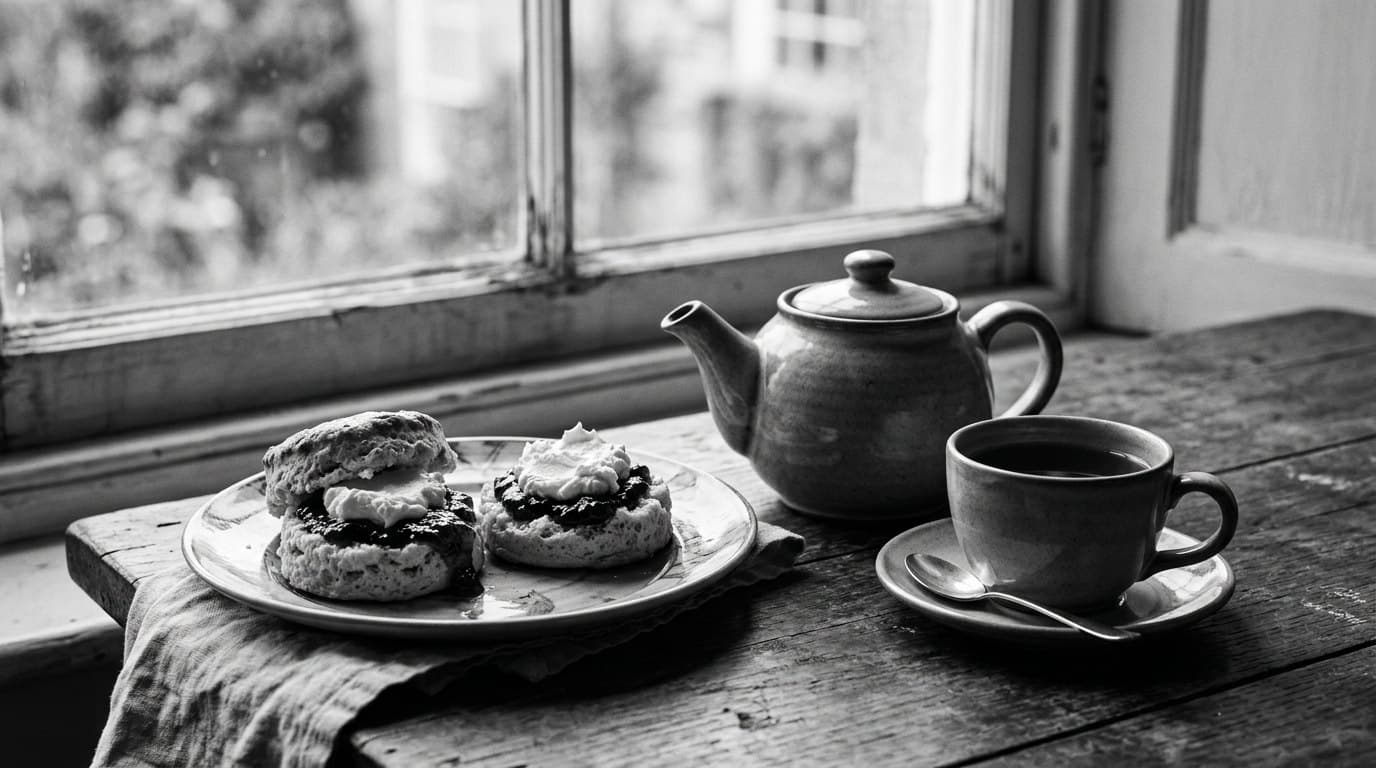
The smallest of the three: a pot of tea with scones, clotted cream, and jam — nothing else. It is a West Country tradition, associated with Devon and Cornwall, where the two counties disagree about whether cream or jam goes on the scone first. A cream tea is the right order when you want the best part of afternoon tea without the two-hour commitment, and it is priced accordingly.
Some British-run tea rooms in the US list a cream tea under that name. Others call it a "scone plate," a "scone and tea," or simply list scones à la carte. Same thing.
What American Venues Actually Mean
Read the menu, not the name. In the US:
"Afternoon tea" almost always means the full tiered service. This is the most reliable term.
"High tea" nearly always means the same thing — a full afternoon tea, often the venue's premium tier with champagne or extra courses. Independent tea rooms sometimes use "high tea" for a larger version of their afternoon tea that adds a soup, salad, or hot savory, which is the closest American usage gets to the original meaning. The listings on this site record the venue's own wording, so a room that calls it high tea appears that way here.
"Royal tea" or "champagne tea" means afternoon tea with a glass of sparkling wine added.
"Cream tea" means scones only.
"Elevenses" — a mid-morning tea with a biscuit or pastry — turns up occasionally on British-run menus and is exactly what it sounds like.
Which to Book
For an occasion, book afternoon tea and, if the budget allows, the champagne tier. For a first visit or a shorter outing, order the cream tea. If a listing offers "high tea" and you want to know whether that means extra food or just a grander name, phone and ask — tea rooms answer that question every day. Whatever the name on the menu, the tea is brewed the same way, and the scones are still the best part.
Explore the full directory
Verified hours, pricing, and booking for every tea room in Texas.
Browse Texas Tea Rooms